At BMSK, we're a team of scientists, technologists, and communicators working together to make weather and climate information more accessible, meaningful, and useful for the people of Bihar.
Our scientists come from diverse fields — hydrology, seismology, remote sensing, GIS, meteorology, computer science, and media — and from some of the country's leading institutes. Together, we bring a mix of research experience, field knowledge, and a shared passion for applying science to real-world challenges.
Whether it's building flood early warning systems, mapping hazards from space, studying earthquakes, or communicating daily weather updates, each of us contributes to the larger goal of strengthening Bihar's resilience to weather and climate-related risks.
Supporting this scientific work is our dedicated team of field assistants and administrators, whose expertise keeps our instruments running, data reliable, and operations smooth.
At heart, we're a collaborative group that believes science works best when it serves people — and we're proud to be part of that mission every day.

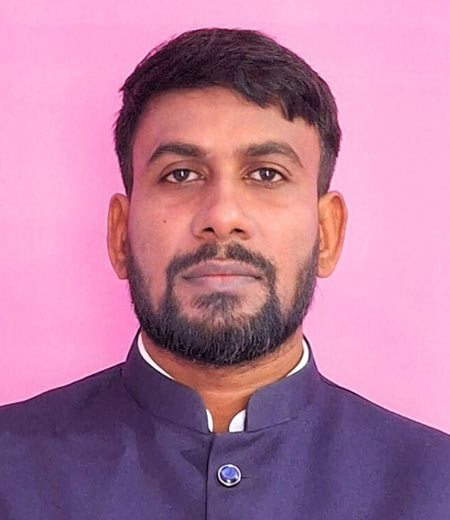
Director Name
Dummy Content - The Bihar Mausam Sewa Kendra (BMSK) is a pioneering state-level meteorological centre established under the Planning and Development Department, Government of Bihar. With Automatic Weather Stations at every ~10km across Bihar, BMSK runs the densest weather observation network in India. Powered by advanced forecasting models and partnerships with SAC-ISRO, BMSK delivers hyper-local forecasts, early warnings, and impact-based advisories. Through digital platforms like the Mausam Bihar app, the Megh Mitra helpdesk, and a real-time GIS weather dashboard, we bring reliable weather insights directly to citizens, farmers, and disaster managers — building resilience against climate risks and safeguarding livelihoods.

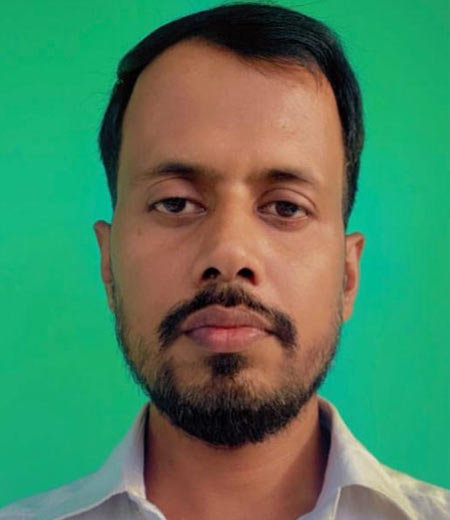
Vikram Kumar
Scientific Officer(SO), Hydrology
Dr. Vikram Kumar holds a Ph.D. in Hydrology from IIT Roorkee. A Civil Engineering graduate and Postgraduate in Water Resources from IIT (BHU) Varanasi, his expertise spans catchment hydrology, rainfall–runoff modeling, hydrological processes, soil–water interactions, and hydro-climatology. His earlier research explored watershed response and flow dynamics in Himalayan terrains through extensive field investigations. With over a decade of teaching and research experience, he currently serves as Scientist (Hydrology) at BMSK, contributing to the development of flood early warning systems and wetland monitoring frameworks for sustainable water management.
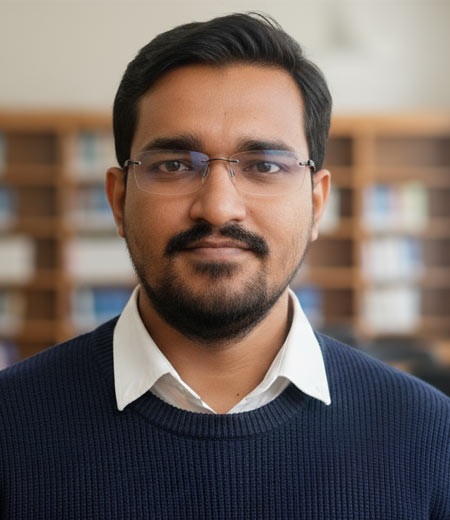
Anuranjan Harsh
Junior Scientific Officer(JSO), Hydrology
A B.Tech (Hons.) in Civil Engineering from NIT Jamshedpur and recognized with a Gold Medal in Physics during his senior secondary education, Anuranjan briefly pursued M.Tech at IIT Delhi before focusing on applied hydrological research. His work covers hydroclimatic risk assessment, groundwater vulnerability, drought analysis and urban heat mitigation using GIS, remote sensing and Python-based modeling. Trained at NWA, CGWB and IISc Bangalore, his co-authored research has been presented at TROPMET 2024 and SAC Ahmedabad. He integrates research, field data, and policy insights for sustainable water management.

Satyam Kumar
Junior Scientific Officer(JSO), Seismology
Satyam Kumar is a geoscientist specializing in seismotectonics, presently serving as Junior Scientific Officer (Seismology). He holds an M.Sc. in Geology from Patna University and a B.Sc. (Hons.) in Geology from Banaras Hindu University. His expertise spans seismic instrumentation management, vulnerability zonation, and geospatial analytics. Skilled in calibration and diagnostics of seismographs, AWS, and ARGs, he holds certifications from Esri India, GSI, and CGWB. He has co-authored research on groundwater vulnerability. He is working towards strengthening Bihar’s seismic telemetry infrastructure.

Sumant Kumar Diwakar
Scientific Officer(SO), Database Management
More than 13+ years of industry and research experience across Geo-spatial, Meteorology, Agriculture, Oracle DBMS and Computer Application development. Strong research professional with Master of Computer Application and M. Tech. in Remote Sensing & GIS from Birla Institute of Technology, Mesra. Experienced with a demonstrated history of working in the reputed Government organization like IMD, MNCFC, ICAR-RCER. Exceptionally interest & Skilled in DBMS & System Administration, APIs development, Web GIS development, Web technology, Hydrological Modeling using SWAT Model, Rainfall isohyetal, Trend and Spatial Analysis, Aeronautical Climatological Summary.

Dr. Neethu
Scientific Officer(SO), Information Dissemination
Dummy Content - The Bihar Mausam Sewa Kendra (BMSK) is a pioneering state-level meteorological centre established under the Planning and Development Department, Government of Bihar. With Automatic Weather Stations at every ~10km across Bihar, BMSK runs the densest weather observation network in India. Powered by advanced forecasting models and partnerships with SAC-ISRO, BMSK delivers hyper-local forecasts, early warnings, and impact-based advisories. Through digital platforms like the Mausam Bihar app, the Megh Mitra helpdesk, and a real-time GIS weather dashboard, we bring reliable weather insights directly to citizens, farmers, and disaster managers — building resilience against climate risks and safeguarding livelihoods.

Riju
Junior Scientific Officer(JSO), Information Dissemination
A graduate in Journalism and Mass Communication from the University of Delhi and a law student at Banaras Hindu University, he possesses a strong foundation in media, communication, and public policy. At BMSK, he prepares and disseminates daily weather bulletins, reports, and social media updates, while developing tools to enhance the accessibility and outreach of weather information. He plays a key role in strengthening BMSK’s communication strategies. He has participated in several national and international seminars and workshops on media, policy, disability rights, and national development, contributing to broader dialogues on inclusive communication and sustainable development.

Preeti Kumari
Junior Scientific Officer(JSO), Remote Sensing and GIS
Preeti Kumari is a Remote Sensing and GIS specialist with 5+ years of experience in geospatial analytics and environmental monitoring. At BMSK, she leads high-resolution hazard and weather mapping for heat & cold waves, floods, lightning, and fire risk using integrated satellite and AWS/ARG data. Her key works include Sentinel-1 SAR flood mapping, fire safety zonation, LULC change detection, and NDVI/LST-based ecological analysis. Earlier, she applied remote sensing in agriculture for sugarcane stage and variety classification, stress mapping, and evapotranspiration modelling. Skilled in ArcGIS, QGIS, ENVI, GEE, and Python, she advances climate resilience through the geospatial intelligence.








हमें फॉलो करें